Governments need to cut Saskatchewan’s massive bureaucracy
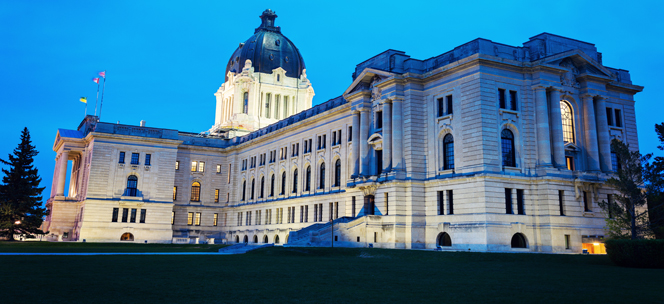
More than a quarter of all Saskatchewanians work for some level of government.
That’s not something to be proud of. Instead, that should raise the alarm for taxpayers.
Nearly 28 per cent of Saskatchewan employees are on government payroll, the highest proportion in Western Canada.
In British Columbia, 21 per cent of people work for the government. In Manitoba it’s 26 per cent and in Alberta it’s 18.4 per cent.
That’s a problem because bureaucracies are expensive and you can’t grow the economy through bureaucracy.
Responsibility lies at every level. Premier Scott Moe, Prime Minister Mark Carney and mayors across Saskatchewan need to cut spending on their bureaucracies.
The Saskatchewan government spent about $8.5 billion paying employees last year. That works out to about 40 per cent of the government’s total spending.
The cost of the federal bureaucracy has surged by about 80 per cent over the past decade. “The average compensation per full-time federal employee reached $143,271 last year,” according to the Parliamentary Budget Officer.
The cities of Saskatoon and Regina are both hiring more employees while hiking property taxes by near record amounts this year.
It’s about cost, but it’s also about fairness. That’s because people who work for the government are paid almost five per cent more than those who don’t, despite doing similar work, according to the Fraser Institute.
And the size of the bureaucracy continues to grow.
The number of people working for some level of government in Saskatchewan has increased by more than 59,000 over the last 10 years. That’s about 68 per cent of all jobs created during that time.
That’s the opposite of a healthy economy. In Alberta, only about 22 per cent of all jobs created in the last 10 years came from the government. In Manitoba it was 26 per cent.
The simple truth is that the government and its employees don’t grow the economy, they just move money around. They only exist because taxpayers create enough value every year to pay them.
Think about a garage.
If the owner hires more mechanics, the shop repairs more cars and the business grows.
But imagine the owner hires more managers instead. The payroll climbs, but the number of cars being repaired stays the same.
Soon there is less money to buy tools or expand the shop. The same principle applies to the economy.
There are many important jobs funded by taxpayers. But when the government sector grows faster than the private sector, resources shift away from wealth creation.
We get more managers and fewer mechanics.
And we are seeing the consequences of less taxpayers paying for more government at the provincial level.
The provincial government has more than doubled the debt since 2017. The government is increasing the debt to $23.9 billion this year and will waste more than $878 million on debt interest payments.
That’s what happens when government spending keeps rising while the pool of taxpayers paying the bill does not.
The only solution is to stop spending so much on government employees. At the provincial level, cutting the cost of the bureaucracy by 4.8 per cent, which is the average wage premium that government employees get, would save Saskatchewan taxpayers $406 million a year.
Those savings could go back to the people who earned the money in the first place through tax relief.
Lower taxes mean businesses can invest. Farmers can upgrade equipment. Families can afford groceries and gas.
Other provinces prove Saskatchewan does not need the largest bureaucracy in Western Canada.
Alberta has a smaller share of government workers. So does British Columbia. Manitoba as well.
Those places still deliver services. The sky did not fall.
Saskatchewan families work hard for every dollar they earn.
Governments should stop using so many of those dollars to feed a massive bureaucracy.
It is time to put government in Saskatchewan on a diet and cut the bureaucracy.